Tuesday, October 23, 2018

Day 30, October 20, Plantation Tours

It was 23.5C this morning with 100% humidity. We thought it had been raining since the windows were all wet!
At 8:00, we got on the coach bus for the drive to Laura Plantation. We have wi-fi on the bus! That is more than we have at the RV Park!

At 9:10, we arrived at the Laura Plantation, which is a Creole sugarcane plantation and is significant for its early 19th century Creole style raised big house and several surviving outbuildings, including two slave cabins.
Louisiana Creole people are persons descended from the inhabitants of colonial Louisiana during the period of both the French and Spanish rule.
 We were free to walk around until it was time for our guided tour. There are 12 buildings on the National Register surrounded by fields of sugarcane and vegetable and fruit gardens.


Rocky, our tour guide took us through the main house, the slave cabins and the French Parterre garden.


A French Parterre is a formal garden consisting of plant beds, typically in symmetrical patterns, and connected by paths.


In the coach house was a "Registry of Slaves" from May, 1808, which listed the slaves names, their attributes and value. There were 17 slaves at that time and their value ranged from $100,000 to $10,000.
The existence of the slave quarters, which workers continued to live in until 1977, contributes to the historic significance of the complex.


Following the tour and exiting through the obligatory Gift Shop, we were back on the bus and off to Oak Alley Plantation.

On our arrival, we enjoyed yet another delicious southern buffet, consisting of Red Beans and Rice with Andouille sausage, Chicken and Sausage soup (spicy), salad , and Craw fish Etouffee over rice.
 Bread pudding and Peach Cobbler for dessert!
Unfortunately, it started raining during lunch and continued on & off through the afternoon.

Oak Alley is named for its distinguishing visual feature, an alley or canopied path, created by a double row of southern live oak trees about 800 feet long, planted in the early 18th century - long before the house was built.


At one time there were 220 slaves working at the plantation, who were fitted on the ankle with "Crab Rattle Shackles" which were designed to help slave catchers locate fugitives. Noisy rattling beads in these ankle shackles would give away their location.


The Plantation "Big House" was constructed in 1839 of Greek Revival architecture. The mansion has a square floor plan, organized around a central hall that runs from the front to the rear on both floors (in contrast to the house at Laura, which had no hall). The rooms feature high ceilings and large windows. The exterior features a free-standing colonnade of 28 Doric columns on all four sides that correspond to the 28 oak trees in the alley.
We had a guided tour of the house, but photography was prohibited.  😞
Constructed of bricks made onsite, the 16" walls are finished with stucco on the exterior and painted white to resemble marble.

The old garage is a sugarcane Theatre where the history of sugarcane cultivation and production of sugar is explained through a video and exhibits.

When we returned to the park, we found out that there was a "boil water" advisory resulting from a problem with the water treatment plant. Great!


Day 29, October 19, New Orleans

Today was another "unplanned" day, due to the fact that we came here instead of Natchez. However, our trusty Wagonmasters came through with flying colours, arranging tours at the last minute!

At 8:45, we clambered on to the campground shuttles and were taken to "Mardi Gras World" for a tour. We had been there previously, but it was still interesting.
We toured the 300,000 square foot working warehouse where floats are made for Mardi Gras parades in New Orleans. It offers a behind the scenes look at New Orleans Mardi Gras traditions. The tour allowed us to see firsthand what it takes to bring Mardi Gras to life year after year. Blaine Kern Studios (where the magic is created) is an operating workshop that has created breathtaking floats for Mardi Gras and other parades around the world since 1947.


Many of the floats and characters are used many times. They are repainted or rebuilt to serve other purposes. Most are constructed out of Styrofoam then covered with papier mache. 


The second visit planned was to tour the National WW II museum, which is a military history museum which focuses on the contribution made by the United States to Allied victory in World War II.
I declined the visit, choosing instead to return to the RV Park and catch up on laundry and the blog. Therefore, I do not have any photos. If interested, you can Google National WWII Museum.

It turned out to be a nice day, with the temperature of 25C.


Monday, October 22, 2018

Day 28, October 18, New Orleans

Beautiful, sunny 18.3C day!
We watched a movie, "Hurricane on the Bayou" in the events room, this morning.

At noon, we boarded shuttle buses which took us into New Orleans, where we loaded aboard mule drawn carriages. Mules are the offspring of a donkey and a horse. They use mules instead of horses since mules are one of the hardiest animals on earth and are smarter, stronger and more sure-footed that horses. They are also more resistant to extreme temperatures and can survive far longer without a drink than their parents.


Following our most enjoyable carriage ride, we assembled at "Cafe du Monde", where we got to sample French beignets, which are  deep fried choux pastry covered with powdered sugar.
Delicious, but messy! 

We had free time to explore and have lunch before catching the shuttle back to the campground at 4:00.
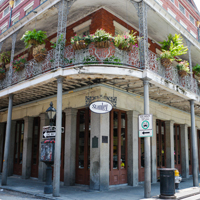
Stanley

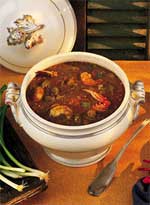
We had lunch at Stanley, an airy, sun-filled cafe on Jackson Square, where we enjoyed a hearty bowl of Gumbo.
GumboGumbo has come to be one of the best examples of the multicultural melting pot that has made New Orleans what it is. It can be described as a type of stew served over rice, but locals would argue that gumbo is almost its own food group.


After walking around until the shuttle arrived, it was back to the campground for Happy Hour to end the day.

Day 27, October 17,Vicksburg, Mississippi to Pontchartrain RV Park, New Orleans

Drizzly rain as we got underway at 9:00.
We passed over the Natchez Trace (which was a road we were looking forward to driving) and continued on south. We had to bypass Natchez because the campground we were booked to stay in had a transformer blow and they had no power.

Traveled down I-55 to I-10, east, which was miles and miles of elevated, concrete roadway over swamps and marshes.


At 2:10, we arrived at Pontchartrain Landing where it is 77F.

Much to our chagrin, there is no internet! That is why there have not been updates on the blog!

After a couple of days, there is limited internet access at the office, so I am working on it when I can. Be patient!

Day 26, October 16, Vicksburg, Mississippi

We had a heavy downpour from 5:00 - 5:45 to start the day.
At 8:00 we boarded a bus to go to the Vicksburg Military Park, which was established in 1899. We have WiFi on the bus!
At 8:15, we arrived at Vicksburg Military Park, which was established in 1899 and preserves the site of the American Civil War Battle of Vicksburg, waged from March 29 to July 4, 1863. Reconstructed forts and trenches evoke memories of the 47-day siege that ended in the surrender of the city. Victory here and at Port Hudson, farther south in Louisiana, gave the Union control of the Mississippi River.
The park includes 1,325 historic monuments and markers, 20 miles of historic trenches and earthworks, a 16-mile tour road, 144 emplaced cannons and the restored gunboat USS Cairo (which was sunk on the Yazoo River.

After watching a movie, "The Campaign and Siege of Vicksburg", we took a guided bus tour of the park entering through the Memorial Arch. Our extremely knowledgeable guide explained the siege and defense lines.  

There are many State monuments erected throughout the 16 mile road.


After exiting the park, we passed by several pre-Civil war homes on the way to the USS Cairo Museum. USS Cairo was one of the first American ironclad warships built at the beginning of the Civil War. It was the lead ship of the City-class gunboats and was named for Cairo, Illinois. 


In June of 1977, the remains of the vessel were transported to the park and partially reconstructed on a concrete foundation near the Vicksburg National Cemetery. The recovery of artifacts revealed a treasure trove of weapons, munitions, naval stores and personal gear of the sailors who served on board. 


The Vicksburg National Cemetery (union) is within the park and embraces 116 acres. It has 18,244 interments (12,954 unidentified). Rounded, upright headstones mark the graves of the known soldiers, while small, square blocks, etched with a grave number only, designate the burials of the unknowns. 


Next on our agenda was LUNCH! We were off to Anchuca, an historic mansion and antebellum (existing before the Civil War) home and Bed & Breakfast. Anchuca is a Choctaw Indian word meaning "Happy Home". Built in three stages, from 1830 to 1855, this Greek Revival style mansion represents the first columned mansion built in Vicksburg.


We enjoyed a wonderful lunch followed by a tour of this stately home. 


Image result for www.riverfrontmurals,com


It had started raining, so we drove by the Riverfront Murals, which are located on the floodwall. The 32 life-like pictorial murals depict periods of history in Vicksburg. Te first mural in the series was unveiled in 2002.


The last stop for the day was the Jesse Brent Lower Mississippi River Museum, which offers a glimpse of what life is like along the river through both interactive and static displays.


Cotton bales we transported down the river on steamers. 


Outside the museum was a fully restored dry docked Riverboat, the MV Mississippi IV, which was open to explore. It is the largest diesel powered vessel on the river powered by two 8-cylinder engines..


On the way back to the campground, we passed by the "Halloween House", which was ridiculously decorated!  This was only half of the display! 

Friday, October 19, 2018

Day 25, Monday, October 15, Moving on to Vicksburg, Mississippi

It rained off & on throughout the night, with a heavy downpour at 5:45. It was 18.4C By 6:20 it changed to a steady rain.
Today began with goodbyes to Gus, Joan, Glen & Carolyn, who decided to leave the trip & go home.

By 9:19, the rain let up & we got packed up and on the road at 9:25.


We took US 61 south, and passed by fields and fields of cotton.Some has already been harvested and is in bales waiting to be picked up.


When we arrived in Redwood, just outside of Vicksburg, it was 82F! Yay!
At 1:45, we checked in the th Ameristar Casino RV Park where it is 86F.

Day 24, Sunday, Oct 14, Graceland RV Park, Memphis, Tennessee

We had rain on & off throughout the night. It was 14.2C this morning and cloudy.
At 9:00 we walked across the parking lot to the entrance of Graceland, where Bill handed out our tickets and VIP passes.


We then boarded the shuttle that took us across the road to the "mansion", which is situated on a  13.5 acre estate. We were all issued headphones and i Pads to use for our self-guided, interactive tour hosted by John Stamos and featuring commentary and stories by Elvis and his daughter, Lisa Marie.


The first stop inside Graceland Mansion will be the foyer where you can view Elvis' living room, dining room, the stairways and his mother's bedroom. 
The tour also includes the kitchen, TV room, pool room the famous Jungle Room, his father's office, the Trophy Building the Racquetball Building and the Meditation Garden.
 Elements of decor you see in these rooms today span all of the Elvis eras at Graceland, but the look is primarily the late 1960s to early 1970s incarnation. 


In the Meditation Garden, we visited the graves of Elvis, his mother, father and his beloved grandmother, Minnie Mae. There is also a marker for his stillborn twin Jesse Garon, who remains buried in an unmarked grave in Tupelo, Mississippi.  


Following the tour of the house, we returned by shuttle to the newly-completed complex across the street.  


The new complex includes a new automobile museum, Presley Motors, and Elvis: The Entertainer Career Museum, the world’s largest and most comprehensive Elvis museum in the world, as well as many more exhibits, restaurants and shops.The new state-of-the-art entertainment and exhibit complex is over 200,000-square-feet in size, “Elvis Presley’s Memphis” enables you to follow the life path that Elvis took, surround yourself with the things that he loved, and experience the sights and sounds of the city that inspired him. Experience Elvis’ life and career like never before – his roots, his influences and his artistry.

After touring, it was lunch time, so we stopped at Vernon's Smokehouse for authentic Memphis BBQ. The ribs were delicious! 

Following lunch, I finished viewing the exhibits, including the planes then rewarded myself ith a Peanut Butter Banana ice cream.


At 3:00, we were on he bus, heading for Mud Island (which didn't sound too inviting on the drizzly day!)  However, the rain had let up when we got there and what we were going to see was the Mississippi River Museum.
The 18 galleries showcase 10,000 years of history of the Lower Mississippi Valley covering subjects from early exploration and settlement, transportation & disasters along the river, and the evolution of music along Ole Man River through displays and narratives. You feel you've stepped back in time as you experience a life-size replica of a riverboat complete with sounds of gamblers and revelers. 


Our leaders & followers were not sure if they were coming or going in this dugout canoe!


What Mississippi River museum would be complete without a scale model of Old Muddy? Located outside the museum on the grounds of Mud Island River Park, the River Walk is one of the most unique representations of the Mississippi River in the world. It is a 5-block long replica of the lower Mississippi River, from Cairo, IL, to New Orleans, LA. Each 30" stride is equivalent to one mile on the actual river.
The river model is a giant jigsaw puzzle made up of 1,746 pre-cast concrete panels, each weighing 8 1/2 tons.
That concluded our day's activities.